CANVAS OF SOIL
Complete Explanation CANVAS OF SOIL
Complete Explanation
Class 9 English | Kaveri | Poet: Maya Anthony
1. Introduction – Begin the Lesson
Good morning, students! Before we begin today’s poem, imagine a painter sitting in front of a blank canvas. What does the painter use to create a beautiful picture? Colours, brushes, imagination and creativity.
Now think about a gardener. What does a gardener need to turn an empty piece of land into a beautiful garden? Soil, seeds, water, sunlight, patience and hard work.
A painter fills a blank canvas with colours, while a gardener fills a piece of land with plants and flowers. Both create beauty. So, can we say that a gardener is also an artist? This is the central thought behind today’s poem, “Canvas of Soil”.
The poet, Maya Anthony, connects nature with art. She invites us to see gardening not merely as a physical task, but as a creative activity. A garden can be understood as a living painting, and the gardener as the artist who helps create it.
2. Understanding the Title
Canvas means a strong surface on which an artist paints. Soil is the upper layer of the earth in which plants grow. By bringing these words together, the poet suggests that soil is like a canvas on which nature and the gardener create beauty.
The poem develops an extended metaphor—a comparison that continues through several lines or throughout a text:
• Soil / earth – a canvas or palette
• Gardener – an artist
• Seeds – brushstrokes
• Flowers and plants – colours and artwork
• Garden – a painting or masterpiece
3. Stanza-wise Explanation
Stanza 1 – Soil, dreams and seeds
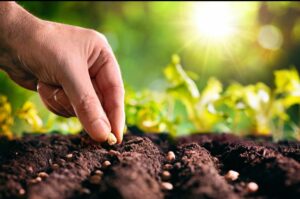
“Palette of earth, rich and deep,\nWhere dreams of gardeners seep.\nBrushstrokes of seeds, planted true,\nAwaiting spring’s vibrant hue.”
Explanation in simple English
The poet begins by comparing the earth to a painter’s palette. A palette is a board on which an artist keeps and mixes colours. In the same way, the rich and fertile soil provides the base for a garden to grow.
The phrase “Where dreams of gardeners seep” suggests that a gardener places hopes and dreams into the soil along with the seeds. The gardener imagines the flowers and plants that may grow there.
The poet then compares seeds to brushstrokes. A painter makes a picture through individual brushstrokes; similarly, a gardener creates a garden by planting seeds carefully.
The seeds are waiting for spring’s “vibrant hue”. Hue means colour or shade. Spring brings fresh growth and bright colours, when plants and flowers begin to flourish.
हिंदी में भावार्थ
कवयित्री धरती की तुलना चित्रकार के पैलेट से करती हैं। उपजाऊ मिट्टी में माली अपने सपनों के साथ बीज बोता है। जिस प्रकार चित्रकार ब्रश के अलग-अलग स्ट्रोक से चित्र बनाता है, उसी प्रकार माली एक-एक बीज लगाकर बगीचा तैयार करता है। बीज वसंत ऋतु का इंतजार करते हैं, जब पौधे बढ़ेंगे और रंग-बिरंगे फूल खिलेंगे।
Word meanings
Word Meaning
Palette रंग रखने और मिलाने का पैलेट
Earth धरती
Rich उपजाऊ; पोषक तत्वों से भरपूर
Deep गहरा
Seep धीरे-धीरे अंदर समाना या फैलना
Brushstrokes ब्रश से बनाए गए रंगों के स्ट्रोक
Planted बोए गए / लगाए गए
Awaiting प्रतीक्षा करते हुए
Spring वसंत ऋतु
Vibrant चमकीला और जीवंत
Hue रंग या रंग की छटा
Check understanding: Why are seeds compared to brushstrokes? — Because, just as brushstrokes help an artist create a painting, seeds help a gardener create a garden.
Stanza 2 – The garden comes alive
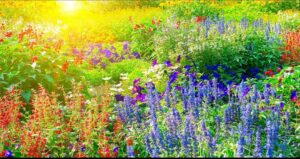
“Blossoms bloom, a painted sight,\nDancing in the morning light.\nShades of green, red, and blue,\nNature’s artwork, ever new.”
Explanation in simple English
In this stanza, the seeds have grown and flowers have begun to bloom. The garden looks like a painted scene because it is filled with beauty and colour.
The phrase “Dancing in the morning light” describes how flowers appear to move gently in the morning breeze. The poet gives flowers a human action—dancing—to make the scene lively.
The poet mentions different shades of green, red and blue to help readers imagine the colourful garden. These colours become part of nature’s artwork.
The words “ever new” suggest that nature’s artwork is always changing. A garden changes with the seasons and with the growth of new plants and flowers. Its beauty is never exactly the same.
हिंदी में भावार्थ
इस stanza में बीजों से पौधे उग चुके हैं और फूल खिलने लगे हैं। बगीचा किसी सुंदर चित्र जैसा दिखाई देता है। सुबह की रोशनी और हल्की हवा में हिलते फूल ऐसे लगते हैं मानो वे नाच रहे हों। हरे, लाल और नीले रंग बगीचे को सुंदर बनाते हैं। प्रकृति की यह कलाकृति हमेशा बदलती रहती है, इसलिए हर मौसम में इसका रूप नया दिखाई देता है।
Word meanings
Word Meaning
Blossoms फूल; विशेषकर खिले हुए फूल
Bloom खिलना
Painted sight चित्र जैसा सुंदर दृश्य
Dancing नाचना
Morning light सुबह की रोशनी
Shades रंगों की छटाएँ
Artwork कलाकृति
Ever new हमेशा नया / निरंतर नया
Check understanding: Why does the poet call nature’s artwork “ever new”? — Because a garden keeps changing as plants grow, flowers bloom and seasons change.
Stanza 3 – Every plot is a canvas
“Each plot, a canvas wide,\nWhere art and life coincide.”
Explanation in simple English
A plot is a small piece or area of land. The poet says that every plot is like a wide canvas. It can be used to create something beautiful.
The word “wide” giv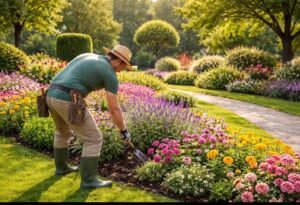 es a sense of openness and possibility. A piece of land offers space for plants, flowers and different forms of natural beauty.
The phrase “Where art and life coincide” means that art and life come together. The garden is artistic because it is beautiful, but it is also full of living plants. Thus, beauty and life exist together in a garden.
हिंदी में भावार्थ
यहाँ कवयित्री कहती हैं कि जमीन का हर टुकड़ा एक बड़े कैनवास की तरह है, जिस पर सुंदरता रची जा सकती है। बगीचे में कला और जीवन का मिलन होता है। कला का अर्थ है उसकी सुंदरता और जीवन का अर्थ है उसमें उगते तथा सांस लेते जीवित पौधे। दोनों एक साथ दिखाई देते हैं।
Word meanings
Word Meaning
Each प्रत्येक / हर एक
Plot जमीन का टुकड़ा
Canvas चित्र बनाने का कपड़ा या सतह
Wide चौड़ा / विस्तृत
Art कला
Life जीवन
Coincide एक साथ होना / मेल खाना
Check understanding: What does the poet mean by “Where art and life coincide”? — She means that a garden brings together artistic beauty and living plants.
Stanza 4 – The gardener as an artist
“In the hands of those who till,\nGardens become paintings still.”
Explanation in simple English
The word “till” means to prepare and cultivate the soil, usually by digging or turning it. “Those who till” refers to people who work on the land, such as gardeners and farmers.
The poet says that in their hands, gardens become paintings. Their effort, care and skill transform ordinary land into something beautiful.
The word “still” needs to be understood in the context of the complete line. It can suggest that gardens remain or stand as paintings. The garden is not a painted picture on paper; it is a living work of art created through nature and human effort.
By comparing gardeners to artists, the poet honours their work and reminds us that creating beauty through gardening is also a valuable form of art.
हिंदी में भावार्थ
अंतिम stanza में कवयित्री उन लोगों की प्रशंसा करती हैं जो मिट्टी को जोतते और उसकी देखभाल करते हैं। “Till” का अर्थ है जमीन को खेती या पौधे लगाने के लिए तैयार करना। माली अपनी मेहनत, कौशल और धैर्य से साधारण जमीन को सुंदर बगीचे में बदल देता है। कवयित्री माली को एक कलाकार का सम्मान देती हैं। बगीचा कागज पर बनी तस्वीर नहीं, बल्कि एक जीवित कलाकृति है।
Word meanings
Word Meaning
Hands हाथ; यहाँ मेहनत और कौशल का प्रतीक
Those वे लोग
Till जमीन को जोतना या खेती के लिए तैयार करना
Gardens बगीचे
Become बन जाना
Paintings चित्र / पेंटिंग
Still यहाँ संदर्भ के अनुसार स्थिर रूप में बने रहना या चित्र जैसा दिखाई देना
Check understanding: How do gardens become paintings in the hands of those who till? — Through their care, effort and skill, gardeners transform land into beautiful gardens that look like living paintings.
4. Central Idea
The poem compares gardening with painting. The poet presents soil as a canvas or palette, seeds as brushstrokes, flowers as colours and the gardener as an artist. Through patience, creativity and hard work, gardeners transform ordinary land into beautiful gardens. The poem celebrates the beauty of nature and the value of the people who care for it.
5. Theme and Message
Theme:
The beauty of nature, the connection between art and life, creativity in gardening, and the dignity of manual work.
Message:
Every activity that creates beauty can be a form of art. We should appreciate nature and respect the gardeners and farmers whose hard work helps make the world greener and more beautiful.
6. Literary Devices / Poetic Devices
Device Example / explanation
Extended metaphor The poem develops the comparison between a garden and a painting throughout.
Metaphor “Palette of earth” compares the earth/soil to a painter’s palette.
Simile / comparison in idea The garden is described as a painted sight; the comparison is expressed metaphorically rather than with ‘like’ or ‘as’.
Personification “Dancing in the morning light” presents flowers as if they can dance.
Imagery “Shades of green, red, and blue” creates a colourful picture in the reader’s mind.
Alliteration “Blossoms bloom” repeats the initial ‘b’ sound.
Rhyme The end words form paired rhymes: deep/seep, true/hue, sight/light, blue/new, wide/coincide, till/still.
Rhyme pattern: The poem uses rhyming couplets (AABB) in the four-line stanzas. The final two-line stanza has the rhyme pattern AA.
7. Important Questions and Answers
Q1. Why does the poet compare the earth to a palette?
The poet compares the earth to a palette because soil provides the base in which a gardener grows plants and flowers, just as a painter’s palette holds colours for creating a painting.
Q2. What are seeds compared to?
Seeds are compared to brushstrokes because each seed contributes to the creation of a beautiful garden, just as each brushstroke contributes to a painting.
Q3. What does “dreams of gardeners seep” suggest?
It suggests that gardeners place their hopes and dreams into the soil when they plant seeds, imagining the beautiful garden that will grow.
Q4. Why are flowers described as dancing?
Flowers move gently in the breeze and appear to dance in the morning light. This is an example of personification.
Q5. What does “Nature’s artwork, ever new” mean?
It means that nature continually creates fresh beauty. Gardens change as plants grow, flowers bloom and seasons change.
Q6. Explain “Where art and life coincide”.
The phrase means that artistic beauty and living things come together in a garden. A garden is both beautiful and full of life.
Q7. Who are “those who till”?
They are people who prepare and cultivate the soil, such as gardeners and farmers.
Q8. How does the poem show respect for gardeners?
It compares gardeners to artists and shows how their hard work, care and skill turn ordinary land into beautiful gardens.
Q9. What is the central idea of the poem?
The poem presents gardening as an art. It shows that gardeners, like painters, use creativity and effort to create beauty, while nature provides the colours and living forms.
Q10. What message does the poem convey?
The poem teaches us to appreciate nature, recognise the creativity involved in gardening and respect people whose work makes the earth beautiful.
8. Quick Revision
• Poem: Canvas of Soil
• Poet: Maya Anthony
• Main comparison: A garden is like a painting.
• Soil: Like a canvas or palette.
• Seeds: Like brushstrokes.
• Gardener: Like an artist.
• Flowers: Like colours in nature’s artwork.
• Main message: Gardening is a creative art, and gardeners deserve appreciation.
9. Oral Recap –
• What does the title “Canvas of Soil” mean?
• How is a gardener similar to a painter?
• What is an extended metaphor?
• What is the meaning of “vibrant hue”?
• Which poetic device is used in “Dancing in the morning light”?
• What does the word “till” mean?
• What do we learn from the poem?